
Termites
Termite Control
Bee Removal Melbourne | Live Relocation, Not Extermination
Swarm on your fence or bees in a wall? We relocate honey bees alive across Melbourne wherever we can. Call 0435 073 966 for a free quote.
Tell us what you have seen
Tell us whether you are looking at a swarm hanging in the open or bees flying steadily into a hole in the building — they are two completely different jobs, and one of them is much cheaper.
Request a callback
Choose your service, add a few details, and we will call you back with a quote. Open 24 hours — we answer after hours.
Bee relocations we have actually done
Live removals from Melbourne properties — colonies taken out of cavities with the comb and brood intact, and rehomed with a beekeeper.
Videos do not download until you press play. Filmed on our own jobs.

We relocate bees. Killing them is the last resort, not the service.
Honey bees are not a pest in the way a cockroach is. They pollinate about a third of what we eat, they are under real pressure, and a swarm resting on your fence is usually the most harmless thing in your garden — it has no hive to defend and it is generally gone within a day or two anyway.
So the first question is always which situation you have. A swarm in the open can be collected and rehomed with a beekeeper, often within the hour. An established colony inside a wall or roof cavity is a bigger job, because the comb, the honey and the brood all have to come out — and if they do not, the honey ferments, the wax melts in a Melbourne summer, and it runs down inside your wall.
The two situations, and why the price is so different
This is the single thing that decides what your job costs.
| Swarm | Established colony | What it means | |
|---|---|---|---|
| What you see | A hanging cluster of bees on a branch, fence or wall | Steady two-way traffic into a hole in the building | Clusters are temporary. Traffic means they have moved in. |
| How long there | Hours to a couple of days | Weeks, months or years | A swarm may leave on its own before we arrive. |
| Comb | None yet | Comb, honey and brood inside the cavity | Comb is what makes it a construction job as well as a bee job. |
| Risk | Low — no hive to defend | Higher, and rising as the colony grows | Swarms are calm. Established colonies defend. |
| The job | Collect and rehome, usually the same day | Open the cavity, remove comb and bees, clean, seal | Different price, different time, sometimes a builder. |
Bee or wasp? One gets relocated, one does not
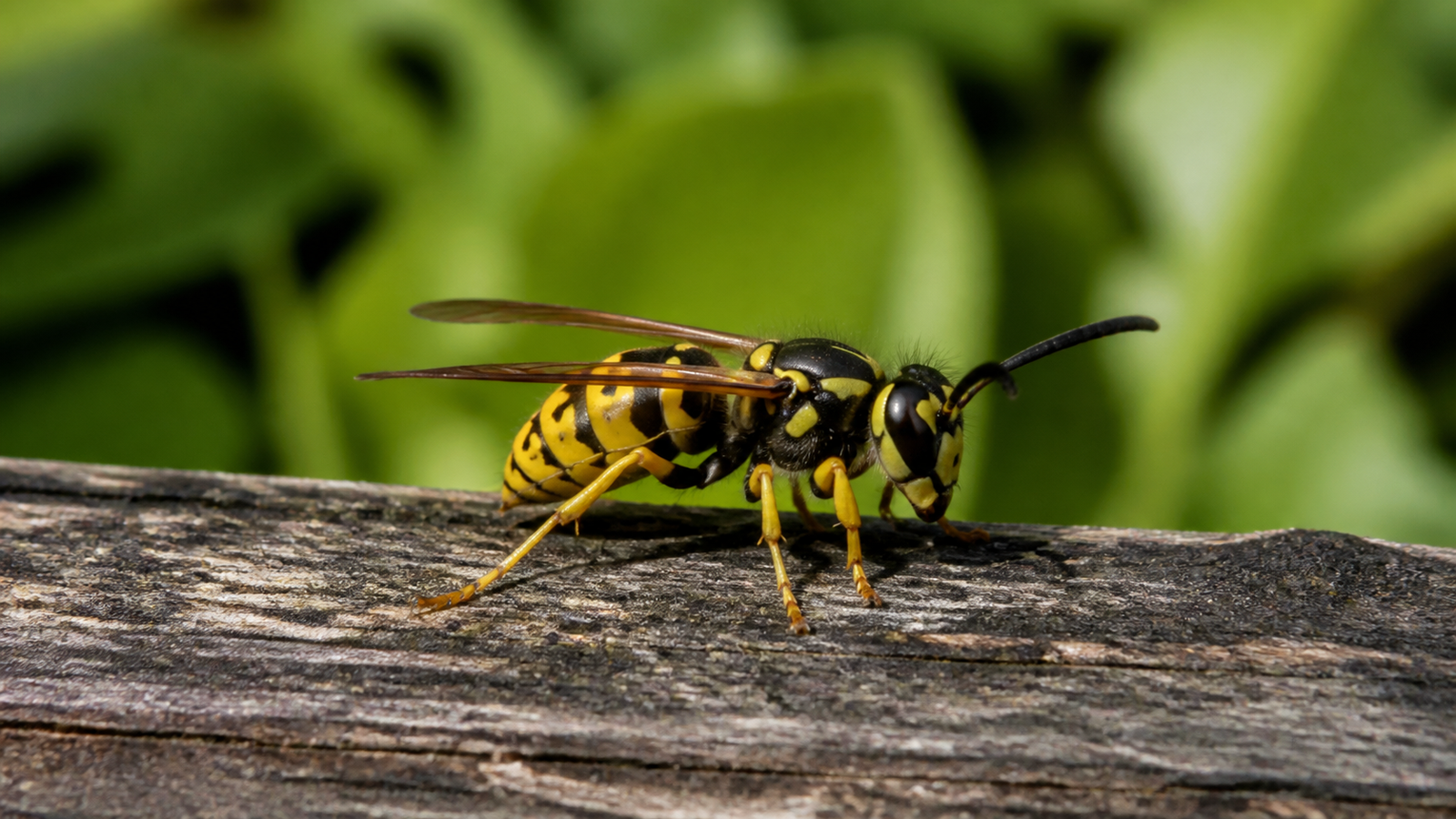
Honey bees are relocated alive wherever we can. European wasps are destroyed. Getting the identification right is the whole first step.
Bees, and what people usually mistake them for
Getting the identification right decides whether the answer is a beekeeper or a pest technician.
It is honey bees
- Furry, thickset, golden brown, about 12 mm
- Visible pollen baskets — yellow lumps on the back legs
- A hanging cluster the size of a football on a branch or fence
- Steady, calm two-way traffic at one entry point
- Bees working flowers nearby without any interest in you
- Wax or honey seeping from a wall, ceiling or weep hole
It is probably not
- Smooth, hairless, bright yellow and black — European wasp
- Aggressive interest in meat, sweet drinks or the bin — wasp
- Large solitary black bees drilling round holes in timber — carpenter bees
- Small bees emerging from holes in the lawn — native ground-nesting bees
- Insects hovering under eaves building small mud tubes — mud daubers
- Bees only present for a day then gone — a swarm that moved on
Colonies split and swarm in spring. A cluster on your fence in October is textbook and usually resolves itself.
If a colony in a cavity is killed and the comb is left, honey ferments and wax melts in summer heat, staining walls and attracting ants, cockroaches and small hive beetle.
Residual comb and beeswax scent is a beacon for the next swarm. Removing it and sealing the cavity is what actually ends the problem.
How we approach bees differently
This page will talk you out of paying us more than once.
A swarm in the open often needs no intervention at all
A resting swarm has no comb, no brood and nothing to defend. It is typically waiting for scout bees to find a permanent home, and it usually moves on by itself within a day or two.
If it is not near a doorway, a play area or anyone with an allergy, the honest advice is often to leave it alone and watch. We will tell you that on the phone rather than charging you for a callout.
Killing a wall colony without removing the comb is a mistake
It is the cheap option and it causes the expensive problem. Without bees to maintain it, honey ferments and wax softens in summer heat, and it runs down inside the cavity — staining plaster, ruining insulation and drawing ants, cockroaches and beetles to the residue.
The comb and honey have to come out. That means opening the cavity, which is why an established colony costs more than a swarm and why we quote it after seeing it.
When we cannot relocate
Sometimes relocation genuinely is not possible — a colony deep in a double-brick cavity with no safe access, or an immediate risk to someone with a severe allergy. In those cases destruction may be the only option.
We will say so plainly and explain why, rather than defaulting to it because it is faster. Live relocation is the service; extermination is the exception.
How a bee job runs
Two different paths, depending on what you actually have.
Identify
We confirm they are honey bees rather than wasps, carpenter bees or native bees — often from a photo, before anyone drives out.
Swarm or colony
A swarm in the open is collected into a box and rehomed. A colony in a cavity is assessed for access and quoted.
Removal
Bees are collected alive wherever possible, and comb, honey and brood are removed from the cavity rather than left behind.
Clean and seal
The cavity is cleaned of residual comb and wax scent and the entry point is sealed, so the next swarm does not move into the same spot.
What bee removal costs
Every price is a from price. A swarm hanging in the open is a straightforward collection; a colony inside a wall or roof is a construction job as well as a bee job. You get the figure in writing before we start.
Swarm collection
An accessible swarm clustered on a branch, fence or wall, collected and rehomed with a beekeeper.
Cavity colony removal
Established colony in a wall, roof or floor cavity — bees, comb, honey and brood removed, cavity cleaned.
Complex access
Height access, double brick, or where structural work is needed to reach the colony safely.
Clear written quotes.We beat any written quote by 5%. Commercial, strata and end-of-lease jobs are quoted on inspection.
Sealed, cleaned and warranted for 12 months
Where we remove a cavity colony we clean out the residual comb and wax scent and seal the entry, and we warrant that seal for twelve months. Old comb left in a wall is the single biggest cause of re-infestation, which is why we will not do a kill-only job on a cavity colony.
Why a wall colony should not be left
A swarm can be left alone. A colony in your building cannot.
Honey damage
A mature colony can hold tens of kilograms of honey. In summer heat it softens and runs down inside the wall.
Secondary pests
Fermenting honey and abandoned comb attract ants, cockroaches, small hive beetle and wax moth.
Structural staining
Honey and wax stain plaster and ruin insulation, and the damage is usually only found when the sheet is removed.
Sting risk
An established colony defends its hive. Risk rises as the colony grows, particularly near a doorway or a play area.
Bee Removal questions we get asked
If yours is not here, call 0435 073 966 — we will answer it on the phone without booking you in first.
Call 0435 073 966How much does bee removal cost in Melbourne?
Swarm collection starts from $149, removal of an established colony from a wall or roof cavity from $390, and complex or height access from $690. The difference is that a cavity colony means removing comb, honey and brood as well as bees. You get the figure in writing first.
Do you kill the bees?
Not if we can avoid it. Live relocation to a beekeeper is the service; destruction is a last resort for cases where access makes relocation genuinely impossible or where there is an immediate risk to someone with a severe allergy. We will tell you plainly which situation you are in.
There is a swarm on my fence. Is it dangerous?
Usually not. A resting swarm has no comb and no brood, so it has nothing to defend and is generally very docile. It is often waiting for scouts to find a permanent home and moves on by itself within a day or two. If it is not near a door, a play area or someone with an allergy, leaving it alone is often the right answer.
Bees are going into a hole in my wall. Is that different?
Yes, completely. Steady two-way traffic into a building means an established colony with comb inside the cavity. That has to be opened up and removed properly — it is a bigger job than a swarm and it is priced after we have seen the access.
Can you just spray them and leave the hive?
We will not do that on a cavity colony. Without bees maintaining it, the honey ferments and the wax softens in summer heat and runs down inside your wall, staining plaster and ruining insulation, and the residue attracts ants, cockroaches and beetles. The comb has to come out.
Is it bees or wasps?
Honey bees are furry and thickset and carry pollen on their back legs. European wasps are smooth, hairless and brightly banded, and they are the ones interested in your barbecue. Send us a photo and we will tell you before anyone drives out.
Will they come back to the same spot?
If the old comb and wax scent are left in the cavity, very likely — it acts as a beacon for the next swarm. Cleaning it out and sealing the entry is what actually ends it, and that seal carries a 12-month warranty.
When is swarming season in Melbourne?
Spring into early summer, when colonies split and send out swarms. A cluster appearing on a fence in October is completely normal and usually temporary.
How quickly can you get to a swarm?
Often the same day — swarms move on by themselves, so there is a real window. Call as soon as you see it rather than waiting, and send a photo if you can.
Other services that often come up with this one
Swarm in the garden or bees in a wall?
We answer 24 hours a day and we can usually be there the same day.
Get your free quote
Tell us what you have seen or heard. We will call you back with a quote before any work starts.