Termites
Termite Control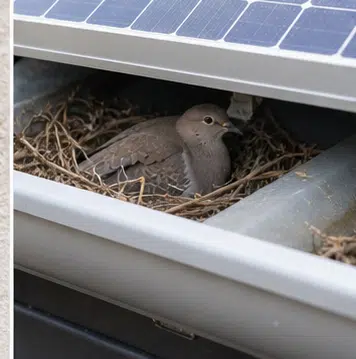
Bird Proofing Melbourne | Solar Panels, Roofs and Ledges
Pigeons nesting under your solar panels? We clear the nests and mesh the panel perimeter across Melbourne — no drilling. Call 0435 073 966 for a free quote.
Pigeons under your solar panels
The gap between a framed solar array and your roof is warm, dry, completely hidden from predators and impossible to see from the ground. To a feral pigeon it is the best real estate on the street, which is why this is now the single most common bird job we attend in Melbourne.
The fix is exclusion, not deterrence. Spikes and gels do nothing under a panel because the birds are not landing on a ledge — they are walking in from the side. A PVC-coated stainless steel mesh clipped around the perimeter closes the gap permanently, and a good one lasts a decade or more.
Tell us what you have seen
Bird jobs are mostly about access and area. Tell us where they are nesting — roof, solar panels, balcony, signage — and roughly how long it has been going on.
Request a callback
Choose your service, add a few details, and we will call you back with a quote. Open 24 hours — we answer after hours.
Proofing a roof without clearing it first seals the problem in
Feral pigeons, starlings, mynas and sparrows nest in roof voids, under solar panels, on ledges, in signage and behind air conditioning units. The nest is the reason they are there and the guano is the reason it becomes a health issue — pigeon droppings are acidic enough to strip paint and corrode metal, and they carry a real respiratory risk when they dry and become airborne.
Which is why the order of work matters. Nests and droppings come out first, the area is disinfected, and only then is the building proofed. Netting or spiking over an uncleared roost traps the mess, the mites and often the birds themselves — and we have been called out to undo exactly that more than once.
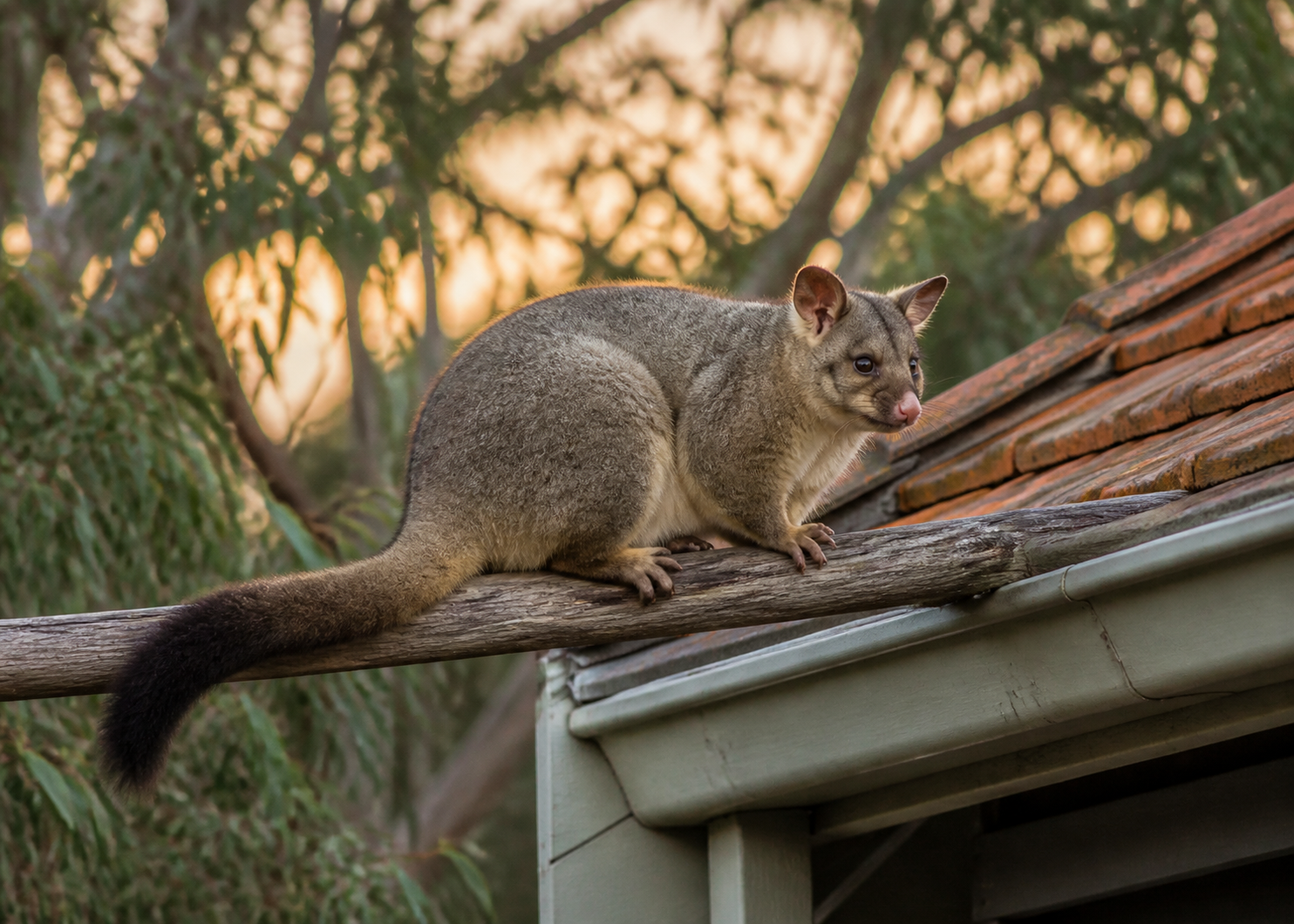
While we are on the roof we look at every gap, not just the one being used. The broken tile or lifted capping that lets birds in is the same opening possums take, and if a nestling or an adult has died up there you will be dealing with maggots and a smell before long — all of which is cheaper to find in one visit than three.
What a bird roost costs a building
It is one of the more genuinely damaging pest problems.
Corrosion
Guano is acidic and strips paint, corrodes metal flashing and degrades mortar, membranes and solar panel frames.
Respiratory risk
Dried droppings become airborne when disturbed and carry a recognised health risk, particularly in roof voids.
Blocked drainage
Nesting material blocks gutters, downpipes and box gutters, which is a common cause of water entering a building.
Mites and secondary pests
Abandoned nests release bird mites into living spaces and attract beetles and flies.
Everywhere else birds get into a Melbourne roof
Solar arrays are the most common job, but the same gaps let birds into roof voids, box gutters and eaves — and the mites and flies that follow an abandoned nest are the part people do not expect.
Where birds get in and what it costs you
Almost always a gap that has been there for years.
Where they nest
- Under solar panels — the most common roost we deal with
- Roof voids through a broken tile or missing barge capping
- Ledges, parapets and window sills on commercial buildings
- Behind signage, air conditioning units and awnings
- Balconies, especially unused ones on apartment buildings
- Eaves gaps and box gutters
What you notice
- Scratching, cooing or chirping in the roof at dawn
- Droppings streaking a wall, path, balcony or car space
- Nesting material blocking a gutter or downpipe
- Feathers and debris around a solar array
- Bird mites indoors after a nest has been abandoned
- A blocked box gutter overflowing into the building
The gap between panel and roof is warm, sheltered and completely hidden. Perimeter mesh is the standard fix, but the space has to be cleared and cleaned first.
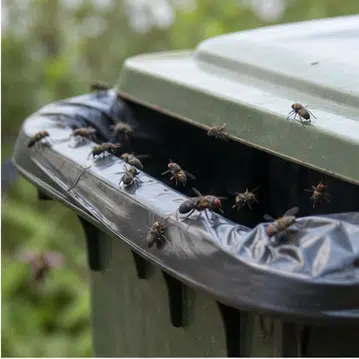
Bird mites leave an abandoned nest looking for a host and come into the living space. This is why nest removal matters even after birds have gone.
Most Australian native birds are protected. Feral pigeons, starlings, mynas and sparrows are introduced species and are treated differently — we will tell you which you have.
How bird work goes wrong
Four ways, all of them avoidable — and the first one is specific to solar.
Nobody should be drilling your solar panels
Some installers screw mesh or brackets straight through the panel frame or into the roof sheet. Drilling a frame can void the panel manufacturer’s warranty, and a new hole in a roof is a leak waiting for the first serious rain.
Proper solar mesh clips to the existing frame with stainless or nylon clips — no penetrations at all. If a quote does not say explicitly that nothing is drilled, ask before you accept it.
Plastic mesh does not survive an Australian roof
A roof cavity in a Melbourne summer is brutal, and plain plastic mesh goes brittle under UV and starts failing within a couple of seasons — usually right where you cannot see it.
We use PVC-coated stainless steel. It costs more per metre and it is the difference between a job that lasts ten years and one you pay for twice.
Clean first, proof second
Netting or spiking a roost that still contains nests, droppings and mites seals the problem into the building. The guano keeps degrading the structure, the mites come inside looking for a host, and in bad cases birds are trapped behind the proofing.
We remove and disinfect first, every time, and we will not quote proofing-only on a roost that has not been cleared.
Droppings are the actual health risk
Dried pigeon guano becomes airborne when disturbed and carries a recognised respiratory risk. It is also acidic enough to strip paint, corrode metal flashing and degrade membranes and mortar.
Clean-up is done with appropriate PPE and disinfection, not a broom. If someone offers to sweep out a roof void without protection, that is a warning sign.
Most native birds are protected
Feral pigeons, common starlings, common mynas and house sparrows are introduced and can be managed. Native species are protected under Victorian law and cannot simply be removed, and active nests carry additional constraints.
We identify the species before we quote, and where a native bird is involved the answer is exclusion after the young have fledged, not removal.
How a bird job runs
Clear, clean, then close.
Inspection
We identify the species, confirm whether it is introduced or protected, and map every access point.
Nest and guano removal
Nests and droppings are removed with appropriate PPE, and the area is disinfected and treated for mites.
Proofing
Netting, spikes, bird wire or mesh selected to suit the structure — including solar panel perimeter mesh, which is our most common job.
Follow-up
We check the proofing after the next breeding season, because birds test a new barrier persistently for the first few weeks.
What bird proofing costs
Melbourne solar panel proofing runs about $300–$600 for a small single-storey array with easy access and $500–$2,000 for most homes; spikes are $30–$80 per linear metre and balcony netting $400–$900+. Ours sit inside that. Every price is a from price — the figure depends on the number of panels, roof pitch, storeys and access — and you get it in writing before we start.
Nest removal and clean-up
Nest and guano removal, disinfection and mite treatment of the affected area. Required before any proofing goes on.
Solar panel mesh
Clearing beneath the array, cleaning, and PVC-coated stainless mesh clipped around the full panel perimeter. Our most common bird job.
Netting and proofing
Custom netting, spiking or bird wire to balconies, ledges, signage and commercial facades, quoted by area and access.
Clear written quotes.We beat any written quote by 5%. Commercial, strata and end-of-lease jobs are quoted on inspection.
12-month proofing warranty
Proofing we install is warranted for twelve months — if birds get back in through a point we closed, we return and fix it. The warranty applies where the area was cleared and cleaned first, because proofing installed over an existing roost is not a repair, it is a lid.
Bird Nesting Control questions we get asked
If yours is not here, call 0435 073 966 — we will answer it on the phone without booking you in first.
Call 0435 073 966How much does solar panel bird proofing cost in Melbourne?
Melbourne pricing runs roughly $300–$600 for a small single-storey array with easy access, and $500–$2,000 for most homes once panel count, roof pitch and height are factored in. Ours starts from $590 installed, including clearing and cleaning under the array first. DIY mesh kits sell for $250–$450 if you are comfortable on a roof — we would rather tell you that than pretend it is not an option.
Why do pigeons nest under solar panels?
The gap between a framed array and the roof is warm, dry, hidden from predators and invisible from the ground. It is close to ideal for a feral pigeon, which is why it has become the most common bird job we attend in Melbourne.
What damage do they actually cause up there?
Four things. Dry nesting material packed against DC wiring is a genuine fire risk, and birds peck at cable insulation until conductors are exposed. Droppings on the panel face block light and cut output. Nests under the array block the airflow the panels rely on to stay cool, and heat costs you efficiency. And guano is acidic — it eats wire insulation, mounting rails and flashing.
Will you drill into my panels or roof?
No, and you should not let anyone else either. Our mesh clips to the existing panel frame with stainless or nylon clips — no penetrations. Drilling a panel frame can void the manufacturer’s warranty, and a new hole in a roof is a future leak. If another quote does not state explicitly that nothing is drilled, ask before accepting it.
What sort of mesh do you use?
PVC-coated stainless steel, clipped around the full perimeter of the array. Plain plastic mesh goes brittle under Australian UV and starts failing within a couple of seasons, usually somewhere you cannot see. Done properly, a stainless mesh install lasts ten years or more.
Can you just put mesh on without cleaning underneath?
No, and we will not quote it that way. Meshing over an occupied roost seals the nests, droppings and mites into the cavity — the guano keeps corroding the rails and wiring, and in bad cases birds are trapped behind the barrier. Clear and disinfect first, mesh second.
Can you just install netting without cleaning first?
No, and we will not quote it that way. Proofing over an uncleared roost seals the droppings and mites into the building, the guano keeps degrading the structure, and in bad cases birds are trapped behind the barrier. Clean first, proof second.
Are the droppings dangerous?
Yes, more than most people expect. Dried guano becomes airborne when disturbed and carries a recognised respiratory risk, and it is acidic enough to strip paint and corrode metal. Clean-up is done with proper PPE and disinfection rather than a broom.
What about protected native birds?
Most Australian native birds are protected under Victorian law and cannot simply be removed. Feral pigeons, common starlings, common mynas and house sparrows are introduced species and are managed differently. We identify the species before quoting, and for natives the lawful approach is exclusion after the young have fledged.
I have mites indoors and the birds have gone. Why?
Bird mites leave an abandoned nest looking for a new host and move into the living space. It is the main reason nest removal matters even after the birds themselves have left. The nest has to come out and the area has to be treated.
How do birds get into a roof void?
Usually a broken or slipped tile, a missing barge capping, a gap at the eaves, or an open box gutter. We map every access point during the inspection rather than closing the obvious one and leaving the rest.
Do you work on commercial buildings?
Yes — ledges, parapets, signage, awnings, loading docks and facades, including height access. We provide documentation of the clean-up and proofing for building managers and owners corporations.
Other services that often come up with this one
Pigeons under your solar panels?
We answer 24 hours a day and we can usually be there the same day.
Get your free quote
Tell us what you have seen or heard. We will call you back with a quote before any work starts.