
Termites
Termite Control
Flies Control Melbourne | We Find What They Are Breeding In
Flies that keep coming back however much you spray? We find the breeding source across Melbourne and treat it. Call 0435 073 966 for a free quote.
Tell us what you have seen
Flies are always a symptom of something. Tell us where they are worst and when they started and we will tell you what they are almost certainly breeding in.
Request a callback
Choose your service, add a few details, and we will call you back with a quote. Open 24 hours — we answer after hours.
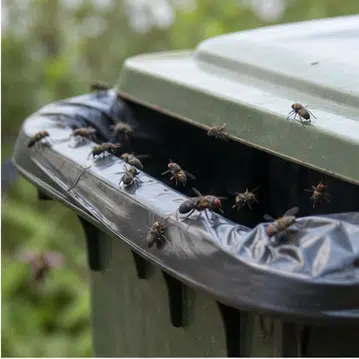
Killing flies is easy. Finding what they came from is the job.
An adult fly lives a couple of weeks. If you are still seeing them a fortnight after spraying, something on or near the property is producing new ones continuously — and that source is the entire job.
In Melbourne it is nearly always one of a short list: a dead animal in a roof void or wall cavity, a wheelie bin with residue in the base, a blocked or rarely-used drain, pet waste in the yard, a compost bay, or a possum or rodent latrine in the roof. We work through that list before anything is sprayed, because a treatment without the source is a two-week fix at best.
What the flies are actually breeding in
Flies are a symptom. Adults live two to four weeks, so if they keep coming back something on the property is producing them — and it is almost always one of these.
The species tells you where to look
This is the whole diagnostic. Identify the fly and you have identified the source.
| Fly | What you notice | What it is breeding in | What we do |
|---|---|---|---|
| Blowfly | Large, metallic blue or green, loud, indoors suddenly | A carcass — roof void, wall cavity, under decking | Locate and remove the dead animal. This is a dead animal job. |
| House fly | Classic grey fly, constant, worst near the kitchen | Bins, food waste, pet waste, compost | Treat and correct the waste source, residual on resting surfaces. |
| Drain fly | Tiny, moth-like, fuzzy, near sinks and floor wastes | Organic film inside drains and floor wastes | Drain treatment — surface spray does nothing to these. |
| Fruit fly | Very small, hovering over fruit bowl or bin | Ripe fruit, spills, recycling, bar mats | Source removal plus targeted treatment. |
| Cluster fly | Slow, sluggish, in numbers at a sunny window in autumn | Overwintering in roof voids and wall cavities | Roof void treatment and proofing before autumn. |
The arithmetic that decides whether flies come back
Fly control is a numbers problem before it is a chemical one. Once you see the figures, the reason a fortnightly spray never wins is obvious.
A house fly lays in batches of about a hundred and can manage five hundred in a lifetime. In Melbourne summer warmth the whole cycle from egg to flying adult takes little over a week. Kill the adults and leave the breeding material and you are back to the same numbers inside a fortnight.
If flies are still present a month after treatment, they are not the flies you sprayed. Something on the property is still producing them. That single observation is the most useful diagnostic you have, and it is why we look before we spray.
They breed in the gelatinous biofilm lining the inside of a waste pipe. Surface spray sits on the porcelain, and bleach runs straight past the film without wetting it. The film must be broken down mechanically or digested with an enzyme product — a genuinely different job from fly spraying.
A spare bathroom, a laundry trough or a floor waste that gets no water lets the trap dry and the film build undisturbed. Running every drain in the house for thirty seconds once a week prevents most drain fly problems without any product at all.
They overwinter in roof voids and wall cavities in large numbers and emerge at warm sunny windows in autumn and early spring. Nothing in your kitchen attracts them, and no amount of cleaning changes it — the void has to be treated and the gaps closed.
Residue in the base of a wheelie bin is prime breeding material. Rinsing the bin, bagging meat waste and keeping the lid closed removes the source entirely. We would rather tell you that than sell you a treatment for a bin.
What you have probably noticed
Where and when the flies appear narrows the source down quickly.
Where they are worst
- Sudden numbers at one window and nowhere else
- Flies concentrated in one room with no food in it
- Maggots on a ceiling, cornice or skirting
- Tiny flies only near sinks, showers or floor wastes
- Slow, clustering flies at a sunny upstairs window in autumn
- Flies worst near the bin store or the compost
What it suggests
- A sweet, decaying smell alongside the flies — almost certainly a carcass
- Numbers rising in hot weather then dropping when it cools
- Flies returning within days of a thorough spray
- Activity worst in the afternoon heat
- A drain that is rarely used, in a spare bathroom or laundry
- Pet waste or fallen fruit in the yard
A sudden burst of large metallic flies inside almost always means a dead animal in a cavity. That is a dead animal removal job, and the flies stop when it is gone.
Drain flies breed in the organic film inside the pipe. Surface spray does nothing — the film has to be broken down.
Cluster flies gather in roof voids and wall cavities to overwinter and emerge at warm windows. Treating the void in autumn is the fix.
Why the spray keeps failing
Two reasons, and neither is the product.
A treatment without the source is a two-week fix
Adult flies live around two to four weeks. Knocking them down without removing what is producing them means you are back where you started as soon as the next generation emerges.
We will not quote a fly treatment without looking for the source first. Sometimes that means the honest answer is a dead animal removal or a drain job rather than a fly spray.
Drain flies cannot be sprayed away
They breed in the gelatinous organic film lining the inside of a drain, which no surface spray reaches, and pouring bleach down does very little because it runs straight past the film.
The film has to be broken down mechanically or with an enzyme treatment. That is a different job to fly spraying and we will tell you which one you actually need.
Our four-step fly treatment
Source first, always.
Identify the species
Which fly it is tells us where to look — carcass, bin, drain, fruit or roof void.
Find the source
We check the roof void, subfloor, drains, bins, compost and yard before treating anything.
Remove and treat
The breeding source is removed or treated, and any carcass is dealt with as a dead animal job.
Residual and proofing
Residual treatment on resting surfaces, plus advice on screens, bin management and drainage so it does not return.
What fly treatment costs
Every price is a from price. Where the source turns out to be a dead animal, that is quoted as a dead animal removal instead — we will tell you before we start rather than charging for both.
Inspection and treatment
Source inspection plus internal and external residual treatment.
Full treatment with source works
Everything above plus drain treatment or waste-source correction. The usual job.
Commercial fly programme
Kitchens, food premises and waste areas, with a documented service record and scheduled visits.
Clear written quotes.We beat any written quote by 5%. Commercial, strata and end-of-lease jobs are quoted on inspection.
Free re-treatment inside the warranty period
If the pest comes back inside the warranty period on a treated property, we return and re-treat at no charge. The warranty follows the treatment, not the visit — an inspection on its own cannot be warranted, and we would rather say that plainly than sell you a guarantee that quietly excludes you.
Why flies matter beyond the nuisance
Particularly anywhere food is handled.
Contamination
Flies feed on waste and carrion and then land on food and preparation surfaces, transferring bacteria directly.
Compliance
In a food business, visible flies are an immediate issue for an environmental health officer or auditor.
They signal worse
Blowflies indoors usually mean a carcass in the building. The flies are the symptom, not the problem.
Rapid build-up
A single blowfly can lay hundreds of eggs, and in Melbourne summer heat they develop in days.
Flies Control questions we get asked
If yours is not here, call 0435 073 966 — we will answer it on the phone without booking you in first.
Call 0435 073 966How much does fly control cost in Melbourne?
Inspection and treatment starts from $139, a full treatment including drain or waste source work from $189, and commercial fly programmes from $279. If the source turns out to be a dead animal we quote that as a dead animal removal instead of charging for both. You get the figure in writing first.
Why do the flies keep coming back after I spray?
Because something is still producing them. Adult flies live two to four weeks, so if they return, the breeding source — a carcass, a bin, a drain, pet waste or compost — is still there. Finding that source is the actual job.
I suddenly have big noisy flies inside. What is that?
Almost always blowflies from a dead animal in a roof void, wall cavity or under decking. There is usually a sweet decaying smell with it. That is a dead animal removal job and the flies stop once the carcass is gone.
What are the tiny flies around my sink?
Drain flies. They breed in the organic film inside the pipe, which is why surface spray and bleach do very little — neither reaches the film. It has to be broken down mechanically or with an enzyme treatment.
Why do I get slow flies at the window every autumn?
Cluster flies overwintering in your roof void or wall cavities. They gather in autumn and emerge at warm sunny windows. Treating the roof void before autumn is the fix.
Do you treat commercial kitchens?
Yes, with scheduled visits, waste-area treatment and a documented service record suitable for an auditor or environmental health officer, worked around your trading hours.
Is the treatment safe around food areas?
Yes. We use products appropriate for food premises, treat resting surfaces rather than spraying into the air, and tell you exactly what needs to be covered or cleared before we start.
What can I do myself?
Rinse bins and keep them closed, clear pet waste and fallen fruit, run rarely-used drains weekly, and fit or repair flyscreens. Those four things solve a surprising proportion of fly calls without us.
Other services that often come up with this one
Flies that keep coming back?
We answer 24 hours a day and we can usually be there the same day.
Get your free quote
Tell us what you have seen or heard. We will call you back with a quote before any work starts.