
Termites
Termite Control
Borer Control Melbourne | Wood-Boring Beetles in Timber
Small round holes and fine dust in your floorboards? We assess whether borer is active across Melbourne before treating. Call 0435 073 966 for a free quote.
Tell us what you have seen
The important question with borer is whether it is still active. Tell us what you have found — holes, dust, a soft floorboard — and we will tell you what to look for.
Request a callback
Choose your service, add a few details, and we will call you back with a quote. Open 24 hours — we answer after hours.

Most borer holes in Melbourne houses are old and empty
That is the single most useful thing on this page. Wood-boring beetle damage lasts as long as the timber does, so a period home can be full of exit holes from an infestation that died out decades ago. Treating dead damage achieves nothing except a smaller bank balance.
Active infestation has tells: fresh, pale-coloured holes with sharp edges, and — the decisive one — fine powdery frass accumulating below them. Old holes are dark, weathered and dust-free. We look for the difference before quoting a treatment, and we will happily tell you that you do not need one.
How to tell live borer from historic damage
Check this before you pay anyone for a treatment, including us.
| What to check | Active infestation | Old, dead damage | Why it matters |
|---|---|---|---|
| Hole colour | Pale, clean, sharp-edged — freshly cut timber | Dark, weathered, edges rounded and dirty | Colour is the fastest first check. |
| Frass | Fine powder accumulating below the holes, replaced after cleaning | None, or old dust that never returns | Clean the surface, wait a fortnight, look again. |
| Timing | Fresh holes and frass appear spring to summer | No change through the year | Emergence is seasonal — a summer check is more reliable. |
| Timber | Usually damp, poorly ventilated, or untreated sapwood | Anywhere, including dry sound timber | Damp is what sustains an active population. |
| Sound | Timber may feel soft or give under pressure | Solid despite the holes | Structural concern versus cosmetic. |
Borer and termite damage are not the same thing
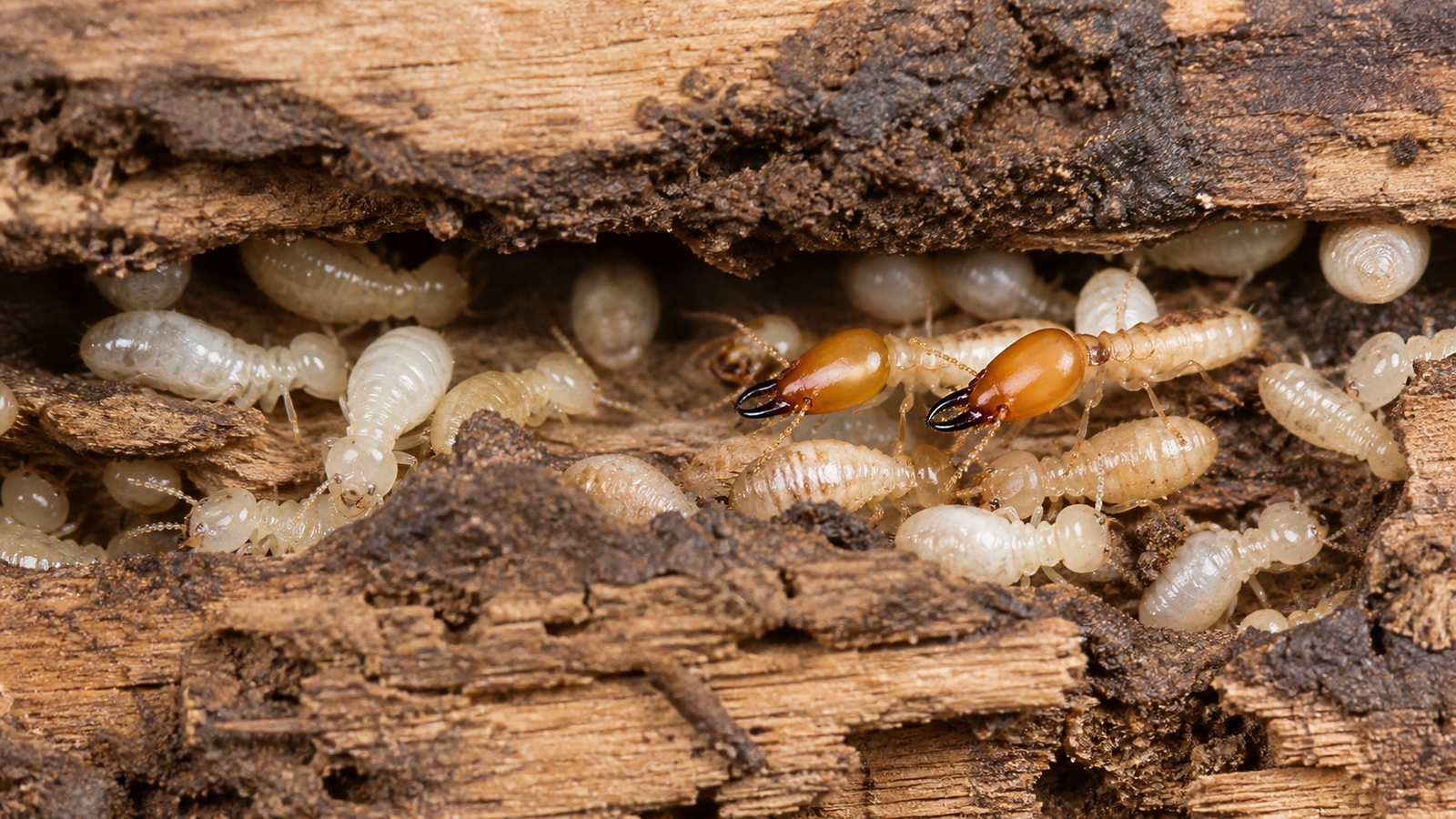
This is the single most useful distinction on the page. Borer bores out and leaves round holes and fine powder. Termites eat from the inside, leave no exit holes, and produce mud instead — and they are far more urgent.
The most honest thing on this page
We turn down borer jobs regularly, and we would rather explain why.
You may not need a treatment at all
A great many Melbourne homes have historic borer damage in original floorboards and subfloor timber from an infestation that ended years or decades ago. The holes are permanent; the beetles are long gone.
If your holes are dark and weathered and no fresh frass appears after cleaning and waiting, we will tell you that and charge you for the assessment rather than an unnecessary treatment.
Treatment without ventilation is half a job
Active borer in a Melbourne subfloor is nearly always a moisture story — blocked vents, poor drainage, an air conditioner discharging against the wall, or garden beds built up over the vents.
We will identify the specific cause. Clearing vents is often cheap and it does more for long-term timber health than any chemical.
Borer and termites are completely different
Borer beetles bore into and emerge from timber, leaving round exit holes and powder. Termites eat the inside of timber and leave no exit holes, mud instead of powder, and far more structural damage far faster.
If you have found mud tubes rather than round holes, stop reading this page and look at our termite page — that is a much more urgent problem.
What borer looks like in a Melbourne home
Usually found in floorboards, subfloor timbers, furniture and old joinery.
What you see
- Small round holes, roughly 1–3 mm, in timber surfaces
- Fine, flour-like powder below or around the holes
- A floorboard that flexes or feels soft underfoot
- Damage along the edge of boards where sapwood sits
- Small beetles at windows in spring and summer
- Powder reappearing after you have wiped it away
Where it turns up
- Subfloor bearers and joists, especially in a damp or poorly vented subfloor
- Original floorboards in period homes
- Antique and second-hand furniture brought into the house
- Untreated pine framing and internal joinery
- Weatherboards and external timber trim
- Timber stored in a damp shed or garage
Clean all the dust away, mark the date and check again in a fortnight during spring or summer. Fresh powder means active. No powder very likely means historic.
Most active infestation in Melbourne homes is in a subfloor with blocked or inadequate ventilation. Fixing the ventilation is part of the treatment.
Second-hand and antique furniture is the most common way an active infestation arrives in an otherwise clean house.
How a borer job runs
Assessment first. Always.
Assessment
We determine whether the infestation is active or historic, using hole condition, frass and seasonal timing — this is the step that decides whether you need us at all.
Identification
Where activity is confirmed, we identify the species and the extent, and check whether structural timber is affected.
Treatment
Surface and injection treatment of affected timber, or borate treatment for accessible subfloor members.
Moisture correction
We identify the ventilation or drainage problem sustaining the population, because that is what stops it returning.
What borer work costs
Every price is a from price. The assessment comes first and is credited against treatment if you proceed — and if the damage turns out to be historic, the assessment is all you pay.
Assessment and report
Inspection to determine whether borer is active or historic, with written findings. Credited against treatment.
Localised treatment
Treatment of affected furniture, joinery or a limited area of flooring.
Subfloor treatment
Treatment of affected subfloor bearers and joists, plus ventilation recommendations.
Clear written quotes.We beat any written quote by 5%. Commercial, strata and end-of-lease jobs are quoted on inspection.
An assessment you can act on
If we find the damage is historic we will tell you so and you pay for the assessment only. Where treatment is carried out it is warranted for twelve months, on the condition that any ventilation or drainage problem we identified has been addressed — because damp timber will simply be recolonised.
When borer does matter
Less often than people fear, but not never.
Structural timber
Sustained activity in bearers and joists genuinely weakens them, and subfloor members are the ones that matter.
Spreading furniture
An infested piece of second-hand furniture can seed the timber in the rest of the house.
Sale inspections
Active borer noted in a timber pest report affects a sale, even where the damage is minor.
It follows damp
Borer activity is usually a signal that a subfloor has a moisture problem worth fixing for other reasons too.
Borer Control questions we get asked
If yours is not here, call 0435 073 966 — we will answer it on the phone without booking you in first.
Call 0435 073 966How do I know if my borer damage is active or old?
Look at the holes and the dust. Active infestation leaves pale, sharp-edged holes with fine powdery frass accumulating below them. Old damage has dark, weathered holes and no fresh powder. Clean all the dust away, note the date, and check again in a fortnight during spring or summer — if no new powder appears, it is very likely historic.
How much does borer treatment cost in Melbourne?
Assessment starts from $200 and is credited against treatment if you proceed. Localised treatment of furniture or joinery starts from $450, and subfloor treatment from $900. If the damage turns out to be historic, the assessment is all you pay.
Do I need treatment at all?
Often not. A great many Melbourne homes have historic borer damage in original floorboards from an infestation that ended decades ago. The holes are permanent and the beetles are long gone. We turn down borer jobs regularly and we would rather do that than sell you something useless.
Is borer the same as termites?
No. Borer beetles bore into and emerge from timber, leaving round exit holes and fine powder. Termites eat timber from the inside, leave no exit holes, produce mud rather than powder, and cause far more damage far faster. If you have found mud tubes, that is a termite problem and it is much more urgent.
Where does borer come from?
Most often it arrives in second-hand or antique furniture, or it establishes in untreated sapwood in a damp, poorly ventilated subfloor. Damp is what sustains an active population.
Can borer damage my house structurally?
Sustained activity in subfloor bearers and joists can genuinely weaken them, which is why we check whether structural timber is involved rather than just cosmetic joinery. Most damage we assess is not structural.
What can I do myself?
Clear and open the subfloor vents, make sure garden beds and paving are not blocking them, and fix any drainage discharging against the building. Improving subfloor ventilation does more for long-term timber health than any chemical.
Can you treat an infested antique?
Yes, usually with a localised treatment or a borate application depending on the finish and value of the piece. Tell us what it is and we will tell you what is appropriate — some finishes rule out some products.
Other services that often come up with this one
Round holes and fine dust in the floor?
We answer 24 hours a day and we can usually be there the same day.
Get your free quote
Tell us what you have seen or heard. We will call you back with a quote before any work starts.